Showing posts with label WWII. Show all posts

Saturday, August 3, 2013

Code Name Verity, by Elizabeth Wein

"It's like being in love, discovering your best friend."

At it's heart, that's what Code Name Verity is about: the bonds of friendship and the courage to do anything for your friends. 

The novel is set in England and France during World War II, and the two main characters - Julie and Maddie (who go by various different names, real and code throughout the novel) - are members of the WAAF, or Women's Auxiliary Air Force. They work mainly as wireless operators, until they are shot down over German-occupied France. Maddie is able to get away, but Julie, who goes by Queenie for much of her narrative, is captured and interrogated by the Nazis. 

Julie is told that she can redeem herself and buy time preventing her death by disclosing secrets about the British war effort. That is how much of the novel manifests itself - through her written confession to the SS officers while imprisoned. I found much of this part of the novel confusing, and sometimes had to re-read to get things straight. A little more than half of the way through the novel, though, the narrative switches to Maddie's point of view, and the reader realizes just how tricky Julie really was. 

The ending was a little abrupt and upsetting, but the bond between the two friends is really what compelled me to keep reading this novel. One of my favorite parts of the novel was when Julie and Maddie shared the ten things they're most afraid of in the world. As events unfolded and new things came to light, they both revised their "Top Ten" list, and I found this very interesting. One of my favorite lines in the story is when Maddie is revising her list, while imprisoned, writing her confession. She says:

"9)Not being able to finish my story.
10) Also of finishing it. 
I am no longer afraid of getting old. Indeed I can't believe I ever said anything so stupid. So childish. So offensive and arrogant
But mainly, so very. very stupid. I desperately want to grow old," (114). 

I think that this is the type of expertly crafted, heartbreaking novel that will grab readers until they finish it. 

Also Try: Flygirl, by Sherri L. Smith; Between Shades of Gray, by Ruta Sepetys; Rose Under Fire, by Elizabeth Wein


Monday, May 21, 2012

Between Shades of Gray, Ruta Sepetys

I've read this book before, but it just came out in paperback so when I bought a copy for my classroom I decided to re-read it. I'm glad I did!

Between Shades of Gray is about a girl named Lina who lives in Lithuania during WWII. Lina, her mother, and her brother are separated from her father and shipped out to a labor camp in Siberia, operated by Joseph Stalin's men. Lina is an aspiring artist, and she hopes that sending drawings of her experiences will help her father find her family.

I love this novel for a few reasons. First of all, so much time is devoted to Hitler's concentration camps when studying WWII, that we often overlook terrible things that were done by other people (like Stalin) during WWII. Also, the book is really well-written, and I love the flashbacks that Lina has linking experiences from the camp with with memories she has of the past.

There are a few questionable scenes, but I'd recommend this book to anyone interested in WWII and in seeing things from a different perspective.


Tuesday, April 24, 2012

JBA Post #8: Is It Night or Day?, Fern Schumer Chapman

Is It Night or Day? follows Edith (Tiddy) Westerfeld as she journeys to America during World War II. Tiddy's family is from a small town in Germany, and they are the only Jews left in town. Tiddy's father desperately wants to leave, but he refuses to go without his mother and she is determined to stay in Germany.
So, the father sends his two daughters - Tiddy and Betty - to America by themselves, on a huge ship. At first the journey seems almost like a grand adventure, but when they arrive in America, things get harder. Betty goes and lives with a foster family, while Tiddy lives with her aunt and uncle in Chicago. Tiddy becomes almost Cinderella-esque in her Aunt Mildred's house: she cleans, carries groceries home, and is even sent out when they have parties.

I really liked this book because it showed how terribly Jews were treated even in America during WWII. I think that's something that most people don't know about. For instance, once fighting got intense between America and Germany, Tiddy got a letter in the mail that she was considered an "enemy alien" by the U.S. Department of Immigration, and had to register as such and carry her papers around with her at all times. There were also kids at school that were mean to her.

The book talks a lot about identity - Tiddy's struggle to assimilate and find her identity in Chicago, as well as her aunt's struggle to appear wealthy even though she's not.

The book was interesting but relatively dry and sometimes a little slow.

Monday, April 16, 2012

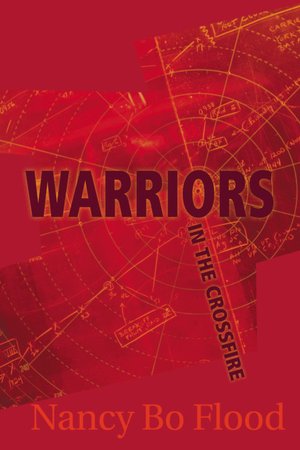
JBA Post #6: Warriors in the Crossfire, Nancy Bo Flood

I finished Warriors in the Crossfire, by Nancy Bo Flood, this weekend and was surprised by how much I enjoyed it. It reminded me of another book I've read, The Bomb, by Theodore Taylor.

Warriors in the Crossfire is about two boys - cousins Joseph and Kento - that live on an island called Saipan during World War II. Joseph is a native, the son of the island's chief. Kento, though, is Japanese. When the Japanese invade the island and begin imposing curfews, restrictions, and even close down the local school, the boys know that fighting will soon begin. Can their familial ties keep them close even though they are on opposite sides? Or will one betray the other?

Warriors in the CrossfireAs predicted, fighting begins and Joseph's father (the chief) must leave, leaving Joseph to care for his family. There's a lot of action and drama as the conflict unravels - there's even a scene on the "suicide cliffs", where natives jumped to their death in order to spare themselves from the fighting.


I'd recommend this book to anyone interested in WWII, in foreign cultures, and most boys.